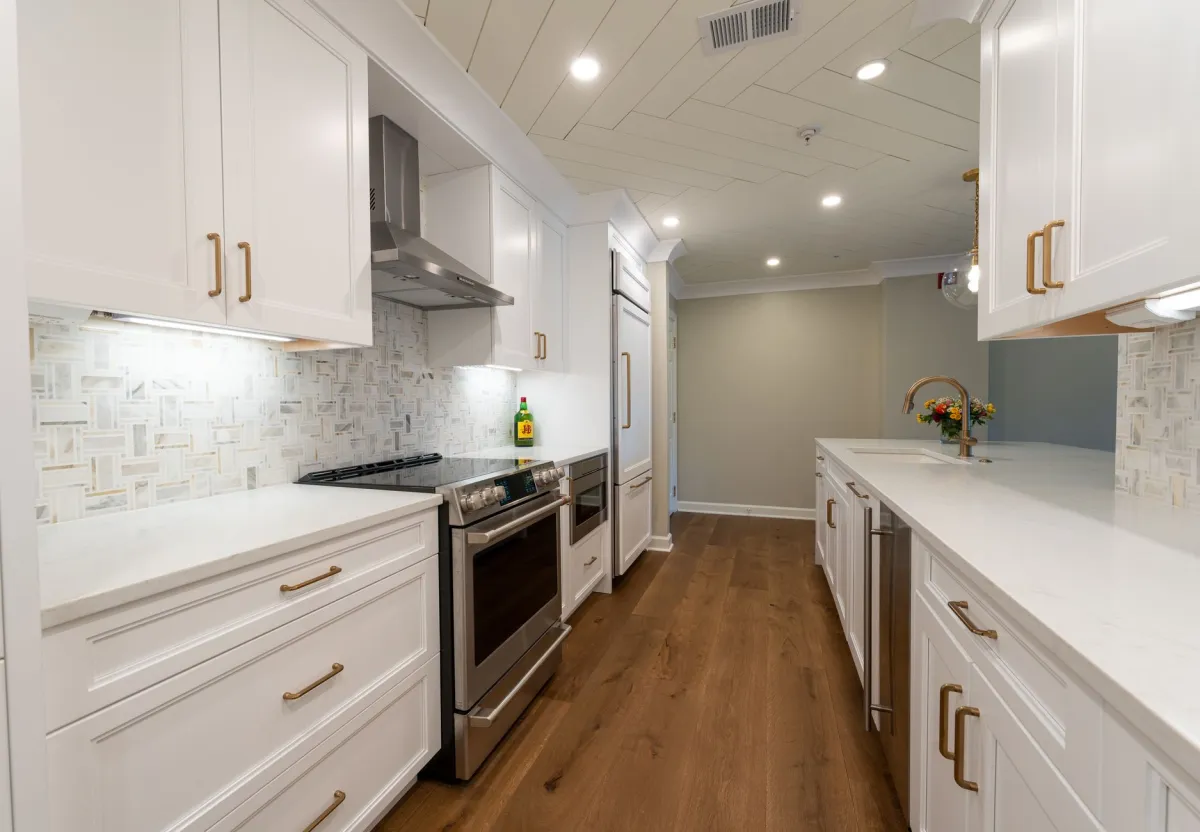
The Short Answer
If your cabinet boxes are structurally sound and the layout already works for how you cook, refacing gives you a new kitchen appearance for a fraction of the cost and a fraction of the disruption. If the boxes are failing, or the layout is the thing that frustrates you, replacement is the only option that actually fixes the problem.
That is the whole decision in two sentences, and almost every homeowner who regrets their choice got it wrong in one of two directions: refacing a kitchen whose layout was the real complaint, or tearing out perfectly good cabinetry because the doors looked dated.
Chester County housing stock makes this question especially live. The county spans everything from stone farmhouses and converted barns in the western townships to 1950s and 1960s ranches and split-levels around Coatesville and Downingtown, to newer construction in Exton, Malvern, and West Chester. Each era produced very different cabinet quality, and quality underneath the doors is what should drive the decision.
What Refacing Actually Includes
Refacing replaces every surface you see and touch while keeping the cabinet boxes fastened to the wall. A complete refacing scope typically covers:
- New doors and drawer fronts in the style, species, and finish you choose. This is the change that does most of the visual work.
- New veneer or laminate applied to the exposed face frames and cabinet end panels so the boxes match the new doors.
- New hinges and drawer slides, which is where the day-to-day feel of the kitchen improves most. Soft-close hardware on old boxes is a genuine upgrade.
- New knobs and pulls, plus new molding, light rail, and toe kick where applicable.
- Optional interior work such as new shelving, drawer boxes, or pull-out organizers.
What refacing does not change: the footprint, the cabinet sizes, the opening locations, and the structural condition of the boxes. A 30-inch base cabinet stays a 30-inch base cabinet, in the same spot, with the same shelf depth.
What Full Replacement Gets You
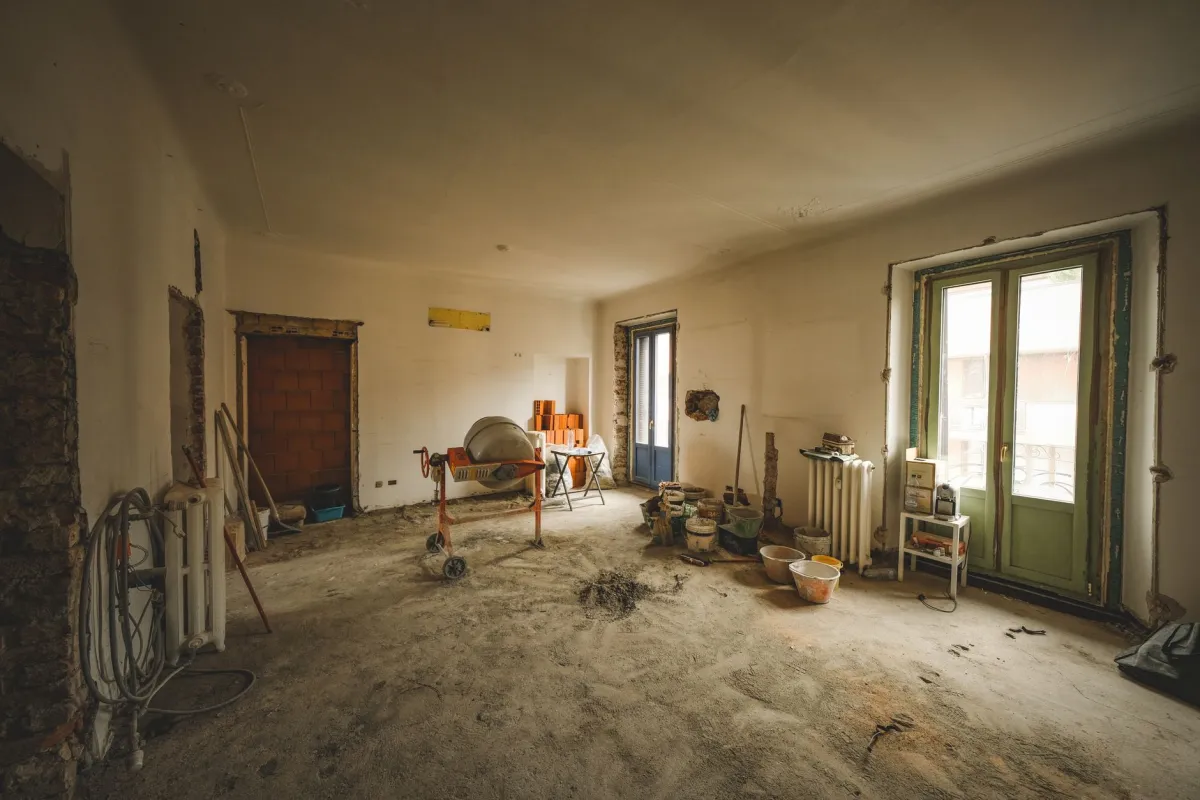
Replacement removes the existing cabinetry entirely and starts from the wall studs. That opens up everything refacing cannot touch:
- A different layout. Moving the sink, relocating the range, adding an island or peninsula, or opening the kitchen to an adjacent room.
- Modern cabinet engineering. Deep drawer banks instead of low base shelves, full-extension slides, taller uppers that use the wall to the ceiling, and interior storage designed in rather than retrofitted.
- A chance to fix what is behind the cabinets. Dated wiring, undersized circuits, old plumbing, and uninsulated exterior walls are all accessible only during a replacement.
- Correct sizing. Odd fillers, dead corners, and the wasted 6 inches next to the refrigerator can finally be reclaimed.
Replacement is a construction project rather than a finish project, which is why the cost, timeline, and permitting picture all change. Our walkthrough of how long a kitchen remodel actually takes covers that sequence phase by phase.
Not Sure Which Your Kitchen Needs?
Altieri & Sons Construction handles both refacing and full kitchen remodeling throughout Chester County and the Greater Philadelphia area. We will tell you honestly which one your cabinets can support.
Cost Comparison for Chester County Kitchens
The ranges below are planning figures, not quotes. Cabinet pricing moves with door style, material, kitchen size, and condition. Use them to decide which conversation to have, then get a written estimate for your actual kitchen.
Refacing
For an average Chester County kitchen of roughly 25 to 35 doors and drawer fronts, refacing is commonly quoted somewhere in the range of 4,000 to 12,000 dollars. The spread is driven mostly by door material. Laminate and thermofoil doors sit at the low end, paint-grade and stained hardwood doors at the high end, and adding new drawer boxes, pull-outs, or soft-close hardware throughout moves the number up within that band.
Full Replacement
Cabinet replacement alone typically starts around 12,000 to 15,000 dollars for stock cabinetry installed in an existing layout and climbs from there. Semi-custom cabinetry in an average kitchen commonly lands in the 20,000 to 40,000 dollar range, and full custom work goes beyond it. Because replacement nearly always triggers new countertops, backsplash, and often flooring and electrical, the realistic project budget is meaningfully higher than the cabinet line item by itself. Our kitchen remodel cost breakdown shows how those line items stack up across a whole project.
The Honest Way to Compare
Comparing a refacing quote to a cabinet-only replacement quote understates the gap. Compare refacing against the full replacement project, including countertops, tile, and the trades that follow. When you do that, refacing frequently comes in at a quarter to a third of the total, which is exactly why it is worth evaluating seriously before assuming a gut renovation is the only path to a kitchen you like.
Timeline and Daily Disruption
This is where the two options differ most, and for many families it matters more than the budget.
Refacing: Days, Not Weeks
After the measure, doors and veneer are fabricated to order, which commonly takes two to five weeks. The installation itself is usually three to five working days. The sink, the range, and the refrigerator stay in service the entire time. There is no demolition, no dust barrier across the house, and no gap while countertops are templated. Most households never set up a temporary kitchen.
Replacement: Weeks, With a Dark Period
On-site construction for a full replacement on an existing footprint generally runs four to eight weeks, longer when walls move. The kitchen is out of service from demolition day until countertops are installed and the sink is reconnected, and there is normally a one to two week gap mid-project while stone counters are fabricated. Add design, selections, and cabinet lead time on the front end and the door-to-door timeline is usually three to five months.
How to Tell Which One Your Kitchen Needs
Open a cabinet door and spend ten minutes on the following before you call anyone. It will tell you most of what a contractor will confirm.
Signs Your Boxes Can Support Refacing
- Doors close square and stay closed; frames are not racked or twisted.
- Shelves are flat, not bowed under normal weight.
- No soft spots, swelling, or delamination at the sink base, which is the first place water damage shows.
- Boxes are solidly anchored and do not flex when you pull on a shelf.
- No musty smell or visible mold inside the boxes.
- The layout works. You are not routinely annoyed by where the sink, range, or refrigerator sit.
Signs You Should Replace
- Particleboard that has swollen, crumbled, or separated, especially under the sink or near the dishwasher.
- Visible water staining, rot, or mold.
- Sagging shelves or a cabinet run that is visibly out of level or pulling from the wall.
- You want a different layout, an island, a wider walkway, or deep drawers in place of base shelves.
- The uppers stop well short of the ceiling and the wasted space genuinely bothers you.
- Electrical or plumbing behind the cabinets needs work anyway, which makes opening the walls the efficient moment.
One clarifying question cuts through most of the indecision: if the doors magically looked brand new tomorrow, would you be happy with this kitchen? If yes, reface. If you would still be annoyed by how it functions, no door style is going to fix that.
The Middle Path Most People Miss
The choice is not strictly binary, and the hybrid approach is often the best value in a Chester County kitchen where the bones are good but one zone is wrong.
A common version: reface the majority of the run, and replace only the cabinets in the problem area. A failed sink base gets a new box. A dead corner becomes a new cabinet with a functional corner solution. Two low base cabinets are swapped for a new drawer bank. New uppers are added above an existing run to reach the ceiling. The new units are finished to match the refaced doors, and the kitchen reads as one coherent installation.
The same logic applies at the project level. Refacing pairs naturally with the finishes that make the largest visible difference: new countertops, a new backsplash, updated lighting, and new flooring. A refaced kitchen with new counters and a new floor reads as a full renovation to most people, at a very different budget and on a far shorter calendar.
Mistakes to Avoid Either Way
- Refacing over a known problem. New doors on a water-damaged sink base is money spent on a cabinet that is already on its way out. Fix the box or replace it.
- Skipping the hardware. Reusing old hinges and drawer slides on a refacing job undercuts the whole result. The way a drawer moves is half of how a kitchen feels.
- Choosing from photos alone. Door samples look different under your lighting and against your counters. Always view physical samples in the actual room.
- Comparing incomplete quotes. Confirm whether a refacing price includes end panels, molding, toe kick, interior work, and hardware. Confirm whether a replacement price includes demolition, disposal, and countertops.
- Not verifying the contractor. Any contractor you hire in Pennsylvania should be registered under the Home Improvement Consumer Protection Act and carry current liability and workers compensation coverage. Our guide to choosing a reliable remodeling contractor in PA covers what to ask for and verify.
- Assuming permits are automatic either way. Refacing is usually cosmetic and often exempt; replacement that touches electrical, plumbing, or structure usually is not. In Pennsylvania, permits are issued by your municipality, not the county, so requirements vary across Chester County townships and boroughs.
Several of these overlap with the broader errors covered in our article on the costly mistakes homeowners make during a kitchen remodel.
Getting a Straight Answer for Your Kitchen
A contractor who recommends refacing or replacement before inspecting the inside of your cabinets is guessing. The right process is specific: open the boxes, check the sink base and dishwasher run for water damage, test whether frames are square, confirm the boxes are anchored, and then talk about layout.
Altieri & Sons Construction is a family-owned remodeling and construction contractor headquartered in Doylestown, serving Chester County including West Chester, Downingtown, Exton, Malvern, Coatesville, and Phoenixville, along with Bucks and Montgomery counties, Philadelphia, and South Jersey. We handle kitchen remodeling and the full range of interior and exterior services. Request a free estimate or call 215-416-8783 and we will tell you honestly which option your kitchen can support.
Get an Honest Assessment First
Altieri & Sons Construction is a family-owned contractor headquartered in Doylestown, serving Chester County and the Greater Philadelphia area since 1976. Licensed, insured, and committed to quality.
Frequently Asked Questions
Is cabinet refacing cheaper than replacing cabinets?
Almost always, yes. Refacing a typical Chester County kitchen is commonly quoted in the range of roughly 4,000 to 12,000 dollars depending on the number of doors, the veneer or door material chosen, and whether hardware and interiors are updated. Full cabinet replacement usually starts near 12,000 to 15,000 dollars for stock cabinetry and climbs well past 30,000 dollars for semi-custom and custom work once installation, countertops, and related finishes are counted. These are planning ranges only. Actual pricing depends on your kitchen size, layout, and product selections, so get a written estimate before budgeting.
How long does cabinet refacing take compared to replacement?
Refacing is the faster path by a wide margin. Once the new doors and veneer have been fabricated and delivered, most refacing installations are completed in roughly three to five working days, and the kitchen stays largely usable throughout. Full replacement involves demolition, cabinet installation, countertop templating and fabrication, and finish work, which typically puts the kitchen out of service for four to eight weeks of on-site construction, plus the design and cabinet lead time that comes before it.
When is refacing a bad idea?
Refacing keeps your existing cabinet boxes, so it is the wrong choice whenever those boxes are the problem. Water damage, delaminating or swollen particleboard, sagging shelves, racked or out-of-square frames, and mold are all reasons to replace rather than reface. Refacing is also a poor fit when you want to change the layout, move the sink or range, add an island, or convert base cabinets to drawer banks. A new face on a layout that frustrates you every day solves the wrong problem.
Do I need a permit to reface kitchen cabinets in Chester County PA?
In Pennsylvania, building permits are issued by your individual municipality under the Uniform Construction Code rather than by the county, so requirements vary between the townships and boroughs of Chester County. Refacing is generally treated as cosmetic work because no electrical, plumbing, or structure is altered, and it often does not require a permit. Full replacement that changes the layout, relocates plumbing, or adds electrical circuits generally does. Confirm with your specific municipality, and have your contractor pull any required permits before work begins.
How long do refaced cabinets last?
The lifespan is governed by the boxes underneath, not by the new doors. Solid plywood or well-built particleboard boxes in sound condition can carry quality new doors and veneer for many years of normal use, which is why box condition is the first thing a contractor should inspect. New doors, drawer fronts, and hinges on a failing box will not stop that box from failing. If the existing cabinetry is already sagging or water-damaged, refacing buys appearance, not durability.
Does refacing or replacing add more resale value in Chester County?
Both update the single most visible surface in the kitchen, and for a home that will be listed in the near term, refacing often delivers the stronger return simply because the cost is a fraction of a full remodel. Replacement tends to make more sense when you plan to stay in the home for years, when the layout genuinely limits how the kitchen works, or when the existing cabinetry is near the end of its service life. Kitchen condition is a well-documented factor in how buyers judge a home, so either route is better than a kitchen that visibly dates the house.