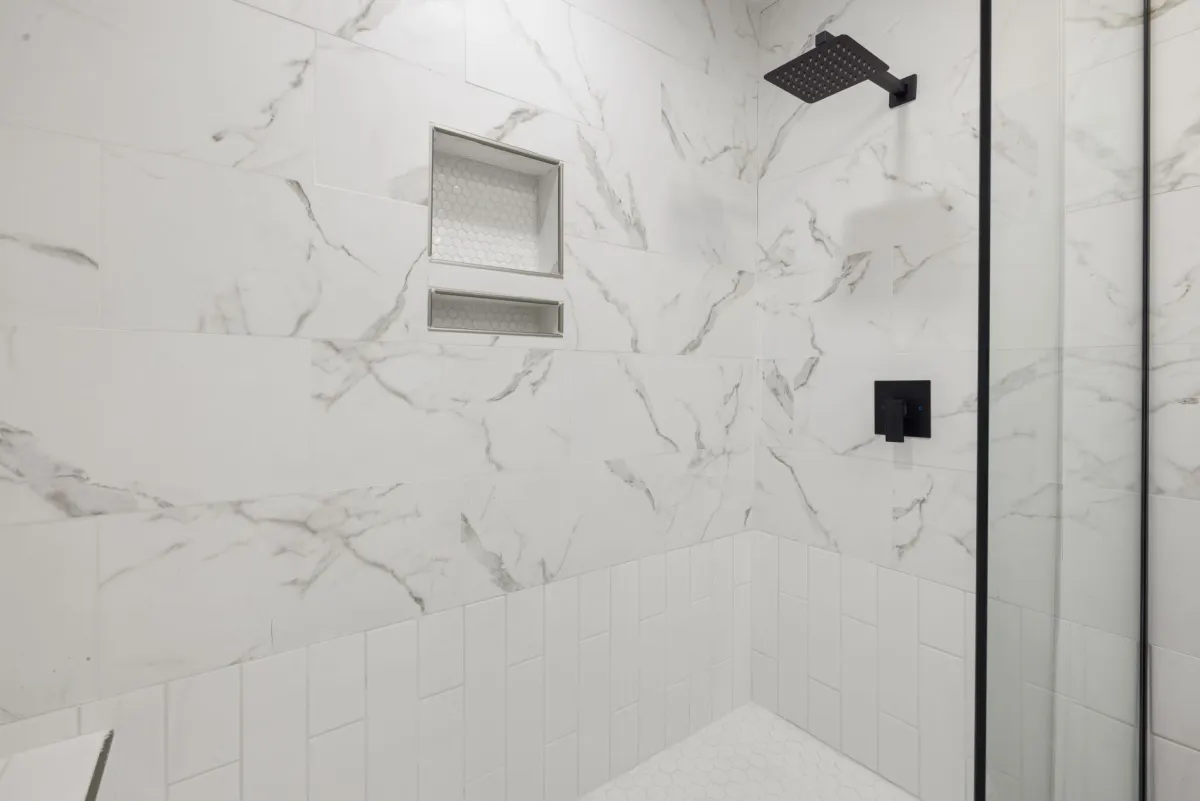
The tub in a Burlington County hall bath is often the least-used fixture in the house. Somebody steps over a 15-inch wall every morning to take a shower in a space designed for bathing, the surround is chalky, and the caulk line has been redone three times. Converting that tub to a proper walk-in shower is one of the highest-impact bathroom projects you can do without moving a single wall.
This guide covers what a tub to shower conversion actually costs in Burlington County in 2026, the difference between a prefabricated swap and a custom tiled shower, what New Jersey permitting requires, and what tends to turn up once the old tub comes out.
Average Tub to Shower Conversion Costs
Installed cost ranges Burlington County homeowners can expect in 2026:
- Prefabricated acrylic shower in existing alcove: $5,000 - $8,500
- Solid surface or laminated wall panel system: $6,500 - $11,000
- Custom tiled walk-in shower, standard alcove: $8,500 - $15,000
- Curbless or zero-threshold shower: $12,000 - $22,000
- Frameless glass enclosure (as an upgrade): add $1,400 - $4,000
- Relocating the drain or waste line: add $800 - $2,500
- Expanding the footprint into a closet or adjacent wall: add $3,000 - $8,000
These figures cover demolition and haul-away, the shower base or pan, waterproofing, wall surround, valve and trim, drain connection, permits, and labor. They do not include a full bathroom remodel -- new vanity, flooring, toilet, and lighting are separate line items, though many homeowners bundle them because the room is already open.
The spread is wide for one reason: two jobs that look identical from the doorway can be very different behind the wall. Reusing the existing alcove, drain location, and valve position keeps a conversion in the lower range. Moving water, changing the floor plane, or widening the opening moves it up quickly.
Types of Tub to Shower Conversions
Direct Alcove Swap
The most common approach in Burlington County's postwar and 1960s-80s homes. The standard 60-inch tub alcove becomes a 60-inch shower using the same three walls, the same drain location converted from a tub drain to a shower drain, and a new mixing valve at shower height. Fast, predictable, and the best value per dollar.
Low-Threshold Walk-In
Same footprint, but the curb is dropped to roughly two to four inches instead of a tub wall. Easier to step into for anyone with mobility limits, while still keeping a simple, reliable waterproofing detail. This is the sweet spot for most homeowners who want an accessible shower without structural work.
Curbless or Roll-In Shower
The floor of the shower sits flush with the bathroom floor. It looks excellent and is the most accessible option, but the pan has to be recessed into the floor structure, which means cutting and reinforcing joists on an upper floor. Far simpler on a slab or over an open basement. Slope, linear drain placement, and waterproofing all have to be right, because there is no curb to contain a mistake.
Expanded Shower
Where a linen closet or a stub of wall sits next to the tub, the shower can be pushed to 66, 72, or 84 inches. This is where a conversion starts crossing into a full bathroom remodel, since framing, electrical, and finishes all get touched.
Shower Materials Compared
Acrylic and Fiberglass Systems
A molded base with matching wall panels. Lowest cost, fastest install, no grout to maintain, and a well-installed acrylic system seals reliably. The tradeoffs are limited design options and a look that reads as builder-grade next to tile.
Solid Surface and Laminated Panels
Thicker composite or stone-look panels over a solid surface base. More convincing than acrylic, still grout-free, and a strong choice for homeowners who want low maintenance without a plastic appearance. Mid-range pricing.
Tile Over a Waterproof Substrate
Porcelain, ceramic, or stone tile set over a foam or membrane waterproofing system. The most design flexibility, the best resale appearance, and the option that allows niches, benches, and accent bands. It also demands the most skill: the waterproofing behind the tile is what determines whether the shower lasts 25 years or leaks in five. Grout needs periodic sealing and eventual maintenance.
Base and Pan Options
A factory-made acrylic or solid surface base is the most reliable and least expensive watertight floor. A mud-set or foam tray pan with tile is what a custom size, curbless design, or fully tiled look requires. Linear drains suit curbless showers; center drains are fine for standard pans.
Thinking About Losing the Tub?
Altieri & Sons handles bathroom remodeling throughout Burlington County and South Jersey. Family-owned since 1976, licensed and insured.
What Drives Your Total Cost
- Drain and valve location: reusing both is the single largest savings. Moving the drain means opening the ceiling below or the floor above and reworking waste and vent piping.
- Floor structure: a slab-on-grade ranch and a second-floor bath over finished space are different projects even with identical fixtures.
- Wall surround choice: panels versus tile can swing the price by several thousand dollars on the same footprint.
- Glass: a framed sliding door is inexpensive; a frameless fixed panel or full enclosure costs considerably more and is custom-measured after tile.
- Scope creep: once the walls are open, adding an exhaust fan, a GFCI outlet, recessed lighting, or new flooring is efficient but adds cost.
- Hidden conditions: rotted subfloor, failed sill plates, old galvanized supply lines, or aluminum wiring found during demo.
- Accessibility features: blocking for grab bars, a built-in bench, a hand shower on a slide bar, and a comfort-height valve are modest additions individually and worth planning for up front.
What We Find Behind Older Tubs
Burlington County housing stock spans colonial-era towns like Burlington City and Mount Holly, large postwar developments in Willingboro and Pemberton, and newer construction across Mount Laurel, Evesham, and Medford. Each era brings its own surprises when a tub comes out.
The most common findings are a soft subfloor at the tub apron where the caulk line failed years ago, deteriorated mortar behind old ceramic tile set over wire lath, and undersized or corroded supply lines. On homes from the 1950s and 60s, tub drains and traps may be galvanized steel that has partially closed off with scale. None of this is unusual, and it is far cheaper to correct while the wall is open than to discover it later through a stained ceiling downstairs.
A good contractor prices these possibilities before demolition rather than presenting them as a mid-project surprise. For more on setting expectations, see our guide on how to prepare your home for a renovation.
Permits and New Jersey Code
Construction in New Jersey is governed by the New Jersey Uniform Construction Code, but permits are issued and inspected by each municipality's construction office. In Burlington County that means Mount Laurel, Moorestown, Evesham, Medford, Willingboro, Cinnaminson, Burlington Township, and every other town handles its own applications, fees, and inspection scheduling.
A tub to shower conversion typically triggers a plumbing permit because the drain, trap, and often the valve are being changed, and a building permit when framing, waterproofing, or wall assemblies are altered. Adding an exhaust fan or outlet brings in an electrical subcode permit. Simple fixture-for-fixture replacement with no piping change is sometimes treated as minor work, but conversions rarely stay that simple.
Permits protect you. An inspected shower has a code-compliant drain and documented work, and it does not become a negotiating point during a future home inspection. Your contractor should pull the permits and coordinate inspections rather than asking you to file as a homeowner.
Project Timeline
A prefabricated conversion in an existing alcove is commonly a two to four day job: demo and haul-away on day one, plumbing rough and inspection, then base and panels, valve trim, and door. A custom tiled shower generally runs one to two weeks on site because waterproofing, mortar, thinset, and grout each need cure time between steps, and the rough plumbing inspection has to be scheduled before the walls close.
The item most likely to extend the calendar is frameless glass. It is measured after the tile is complete and typically takes one to three weeks to fabricate, so the shower is often usable with a temporary curtain before the glass arrives. Tile lead times matter too -- stock porcelain is immediate, while special-order or imported tile can take weeks.
Resale and Aging in Place
Two considerations usually drive this project. The first is resale: a dated tub with a cracked surround reads as deferred maintenance, while a clean walk-in shower makes the whole bathroom feel updated. The common guidance is to keep at least one bathtub in the house for families with young children, so converting a primary bath while leaving the hall tub intact is the low-risk play. In a one-bathroom home, think carefully before removing the only tub.
The second is staying in the home. Stepping over a tub wall is one of the first tasks that becomes difficult with age or after a knee or hip surgery. A low-threshold or curbless shower with blocking for grab bars, a bench, a hand shower, and slip-resistant floor tile lets a bathroom work for decades. Installing blocking in the walls during a conversion costs very little and means grab bars can be added later wherever they are actually needed, instead of wherever a stud happens to be. For a wider view of scope and budget, compare this project against our full bathroom remodel cost guide.
Choosing a Contractor for the Job
- Ask how they waterproof: the answer should name a specific system -- a sheet or liquid membrane, a foam board system, or a factory base -- not just "we tile it."
- Confirm registration and insurance: New Jersey requires home improvement contractors to be registered with the state, and you should see a current certificate of liability insurance.
- Get the permit plan in writing: who pulls it, which subcodes, and who meets the inspector.
- Insist on an allowance structure: tile, valve, and glass allowances should be spelled out so upgrades do not turn into vague change orders.
- Separate the two warranties: the manufacturer covers the product, the contractor covers the installation. Get both in writing.
Altieri & Sons Construction is a family-owned remodeling and construction contractor serving Burlington County and the surrounding South Jersey and Philadelphia area since 1976 -- three generations of the Altieri family. For broader guidance on vetting bids, read how to choose a remodeling contractor. To talk through your bathroom, call Giovanni at 215-416-8783 or request a free estimate online.
Get a Free Tub to Shower Conversion Estimate
Altieri & Sons Construction serves Burlington County and the greater South Jersey and Philadelphia area. Licensed, insured, and family-owned since 1976. 10% discount for seniors, military, and first responders.
Frequently Asked Questions
How much does a tub to shower conversion cost in Burlington County NJ?
Most Burlington County homeowners spend roughly $5,000 to $12,000 for a tub to shower conversion in 2026. A straightforward swap that reuses the existing alcove and drain location, with an acrylic base and prefabricated wall panels, sits at the low end. A fully tiled walk-in shower with a glass enclosure, niche, and bench typically lands in the middle of that range. Curbless or roll-in showers that require floor framing changes, and conversions that move the drain or expand the footprint, run higher. The single biggest cost driver is whether the plumbing and floor structure stay where they are.
Do I need a permit for a tub to shower conversion in New Jersey?
Usually yes. Work in New Jersey falls under the New Jersey Uniform Construction Code, and permits are administered by each municipality's construction office. Replacing a fixture in place is sometimes treated as minor work or ordinary maintenance, but a tub to shower conversion normally involves changing the drain, altering the waste and vent, and reworking framing or waterproofing, which generally requires plumbing and building permits plus inspections. Requirements and fees vary between towns such as Mount Laurel, Moorestown, Evesham, Willingboro, and Burlington Township, so your contractor should confirm with the local construction office before demolition begins.
How long does a tub to shower conversion take?
Plan on about one to two weeks of active work for most conversions. A prefabricated acrylic or solid surface system in an existing alcove can be done in two to four days. A custom tiled shower takes longer because waterproofing, mortar, tile setting, and grout each need cure time, and the glass enclosure is measured only after the tile is finished, which commonly adds one to three weeks of lead time for the glass itself. Discovering rot or old galvanized supply lines behind the tub can add days to the schedule.
Should I keep at least one bathtub in the house?
It is a reasonable guideline for resale. Buyers with small children often want at least one tub in the home, so converting the only tub in a single-bathroom house can narrow your buyer pool. If you have a hall bath and a primary bath, converting the primary bath to a large walk-in shower while leaving the hall tub in place is the common approach and is generally well received. In a single-bathroom home, a tub-shower combination or a deep alcove shower with a hand shower can be the safer choice.
Is a curbless shower worth the extra cost?
It depends on your floor structure and your goals. A curbless or zero-threshold shower looks clean, is easier to clean, and is the most accessible option because there is nothing to step over. The added cost comes from recessing the shower pan into the floor framing, which usually means cutting and sistering joists or building up the surrounding floor, plus a more demanding waterproofing and slope detail. On a slab or over an accessible basement or crawlspace it is far easier than on an upper floor. If aging in place is a priority, many homeowners find the upgrade worth it.
Does converting a tub to a shower add value to a home?
A well-executed walk-in shower usually improves how a bathroom shows and how it functions day to day, which helps at resale, but it is not a guaranteed dollar-for-dollar return. The value comes from replacing a dated, leaking, or hard to enter tub with a clean, well-waterproofed shower that buyers can picture using. Quality of the tile work, glass, lighting, and ventilation matters more to perceived value than how much you spend on fixtures. A shower that was built without a permit or shows signs of water damage can work against you during a home inspection.