Tile is the longest-lasting surface most homeowners ever install, and the one that fails most visibly when it is rushed. The tile itself is rarely the problem. What goes under it, and whether wet areas are genuinely waterproofed, separates a floor that still looks new in twenty years from one with cracked grout by next winter.
Porcelain, Ceramic, and Natural Stone
Showroom samples all look good under showroom lighting. The practical differences show up in how each material handles traffic, water, and a Pennsylvania winter tracked in on boots.
Porcelain. Fired denser and hotter than standard ceramic, with very low water absorption. It resists chipping, wear, staining, and freeze-thaw damage better than the alternatives, which makes it the default for floors, entryways, mudrooms, and anything below grade. Through-body and rectified porcelain also hold up better at cut edges. Modern large-format porcelain planks convincingly imitate wood and stone while behaving like tile, which is exactly what you want in a laundry room or a basement.
Ceramic. Softer, lighter, easier to cut, and usually less expensive. It belongs on walls, backsplashes, tub surrounds, and lower-traffic floors. It is a perfectly good material used in the right place; it just does not love heavy traffic or impact.
Natural stone. Marble, travertine, slate, and granite bring depth and variation that manufactured tile still cannot fully reproduce. The tradeoff is maintenance: most stone is porous and needs periodic sealing, polished marble etches from acidic cleaners, and some stone is softer than it looks. In a busy family bathroom, honed stone or stone-look porcelain is often the more realistic choice.
Glass and mosaic. Excellent as accents, shower niches, and backsplashes. Mosaic sheets also solve sloped shower floors, since the small format follows the pitch to the drain. Labor per square foot is higher, so these work best as features rather than whole-room material.
One specification worth asking about on any floor tile: the slip resistance rating, especially for bathrooms, entries, and covered porches. Large, high-gloss tile looks striking and gets slick when wet.
What Tile Work Costs Here
Tile pricing confuses people because the material cost is the number they see first and the smallest part of the total. Labor, prep, and membranes usually outweigh it. Treat the following as planning ranges and get a real number after a walkthrough.
General planning ranges, installed:
- Straightforward floor tile: roughly $12-$30 per square foot
- Tiled shower walls, pan, and waterproofing: roughly $25-$60 per square foot of tiled area
- Kitchen backsplash: usually priced as a small project rather than by the foot
- Natural stone: typically a premium over porcelain for both material and labor, plus sealing
What moves the number up:
- Demolition and disposal of existing tile, mortar beds, or layers of old flooring
- Subfloor repair, re-fastening, or adding a layer to control deflection
- Uncoupling membranes, waterproofing systems, and heated floor mats
- Diagonal, herringbone, or basketweave layouts, which add cuts and waste
- Large-format tile, which requires a flatter substrate and more careful setting
- Small rooms with many cuts, since the per-foot cost rises as the area shrinks
- Schluter-style edge profiles, curbless entries, and custom niches or benches
Order 10 to 15 percent more tile than the measured area. Cuts, waste, and future repairs all come out of that overage, and dye lots change between production runs, so matching a discontinued tile three years later is usually impossible. Keep the leftover boxes. If tile is part of a larger project, our Bucks County kitchen remodel cost guide puts the surface budget in context with cabinets and counters.
Subfloor Prep Decides Everything
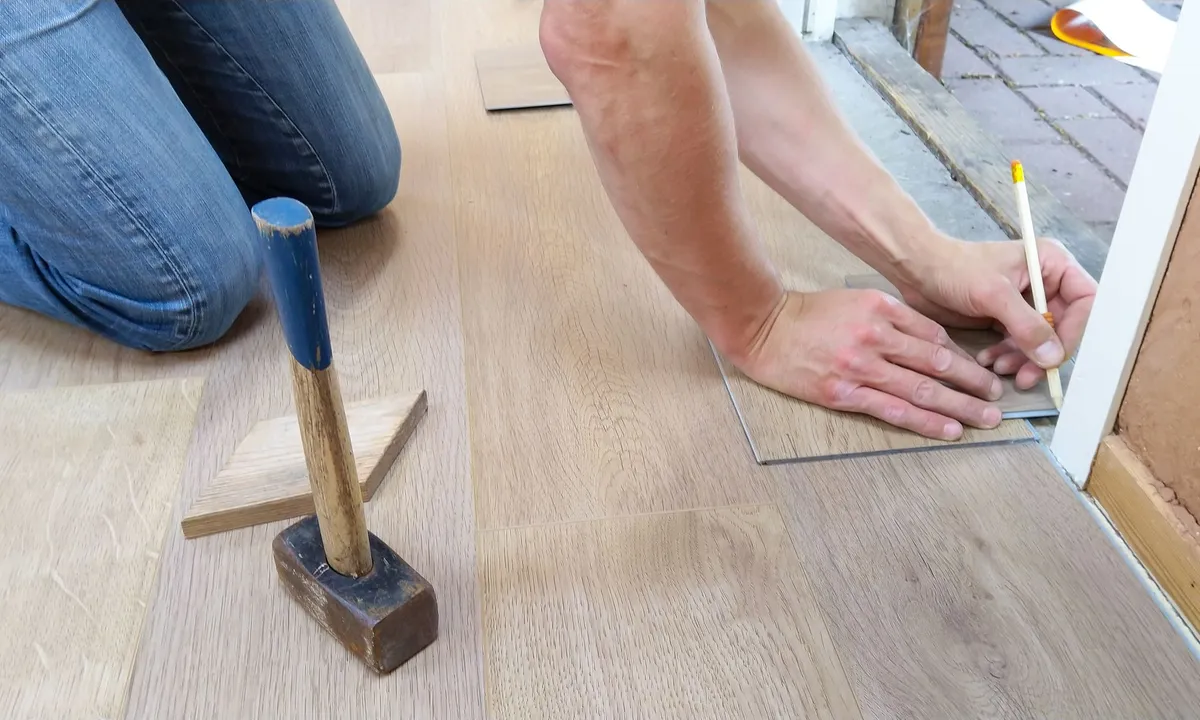
Almost every tile failure traces back to what was underneath. Tile and cured grout are rigid. Anything that flexes or moves beneath them eventually shows up as a crack.
Deflection. Wood-framed floors bounce. If joists are undersized, over-spanned, or notched, that movement travels into the tile layer. On older homes this is a real consideration, and the fix can be as simple as blocking and re-fastening or as involved as sistering joists. It is checked before tile is ordered, not after it cracks.
Flatness. Large-format tile is unforgiving. A floor that feels flat underfoot can still vary enough to cause lippage, where tile edges sit at different heights. Self-leveling underlayment solves it, and skipping that step is a common shortcut.
The right underlayment. Cement backer board over properly fastened plywood is the traditional approach and still works. Uncoupling membranes are the modern alternative, allowing slight independent movement between substrate and tile. Over a concrete slab or a radiant heat system, that isolation layer matters a great deal.
Movement joints. Tile expands and contracts. Perimeter gaps at walls, soft joints at transitions, and joints across large field areas give it somewhere to go. Grouting hard into a wall or cabinet base is how a field of tile ends up tenting.
Tiling over existing surfaces. Sometimes acceptable, often not. The existing layer has to be flat, fully bonded, structurally sound, and tolerable in added height at doors, thresholds, vanities, and appliances. Cushioned vinyl and hollow-sounding tile are automatic tear-outs. Our flooring installation work starts with that evaluation, and the flooring options comparison is a good next read if you are still weighing tile against hardwood or luxury vinyl.
Showers and Wet Areas
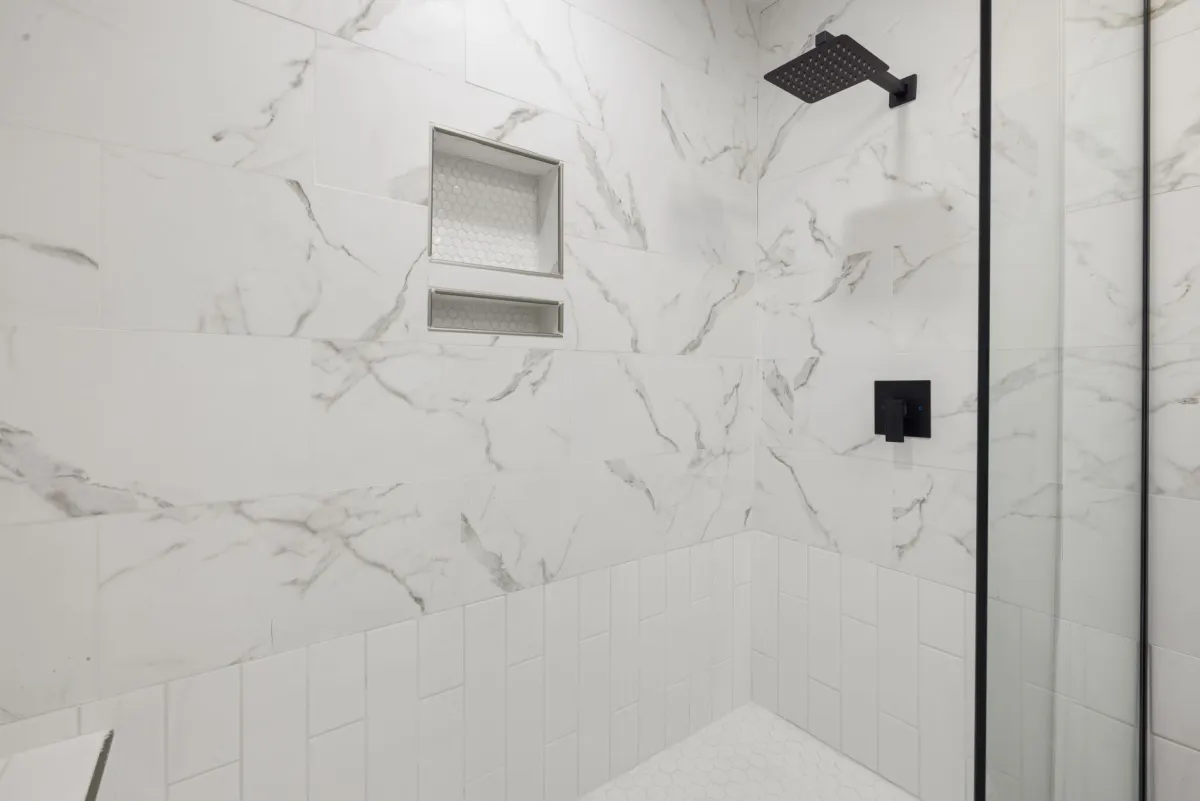
Here is the single most important thing to understand about tile: tile and grout are not waterproof. Grout is cementitious and porous. Water passes through it. The waterproofing layer behind the tile is what protects the framing, and it is the part of the job you will never see once the work is done.
A properly built tiled shower includes:
- A backer board or foam substrate, never drywall or green board
- A continuous sheet or liquid-applied waterproofing membrane across walls and pan
- A correctly sloped pan, about a quarter inch per foot toward the drain
- A bonding flange or clamping drain integrated into the membrane, not just set near it
- Pre-slope under any traditional mortar bed, so water cannot sit on the liner
- Flood testing the pan before tile goes on
- Silicone, not grout, at inside corners and change-of-plane joints
That flood test is worth asking about by name. It takes a day and it is the only way to confirm the pan holds water before it is buried under tile. A failed shower pan discovered later means demolition, and sometimes framing and ceiling repairs below.
Niches, benches, and curbless entries are all achievable, but each adds waterproofing detail and has to be planned rather than improvised mid-job. If you are reworking a tub area, our guide to a tub to shower conversion walks through the plumbing and layout side, and our bathroom remodeling page covers the full scope.
Room by Room Through the House
Bathrooms. Tile's home territory. Porcelain floor with the slip rating checked, porcelain or ceramic on walls, mosaic on the shower floor. Heated floor mats are a modest add-on during a tile job and nearly impossible to retrofit later, which makes this the moment to decide.
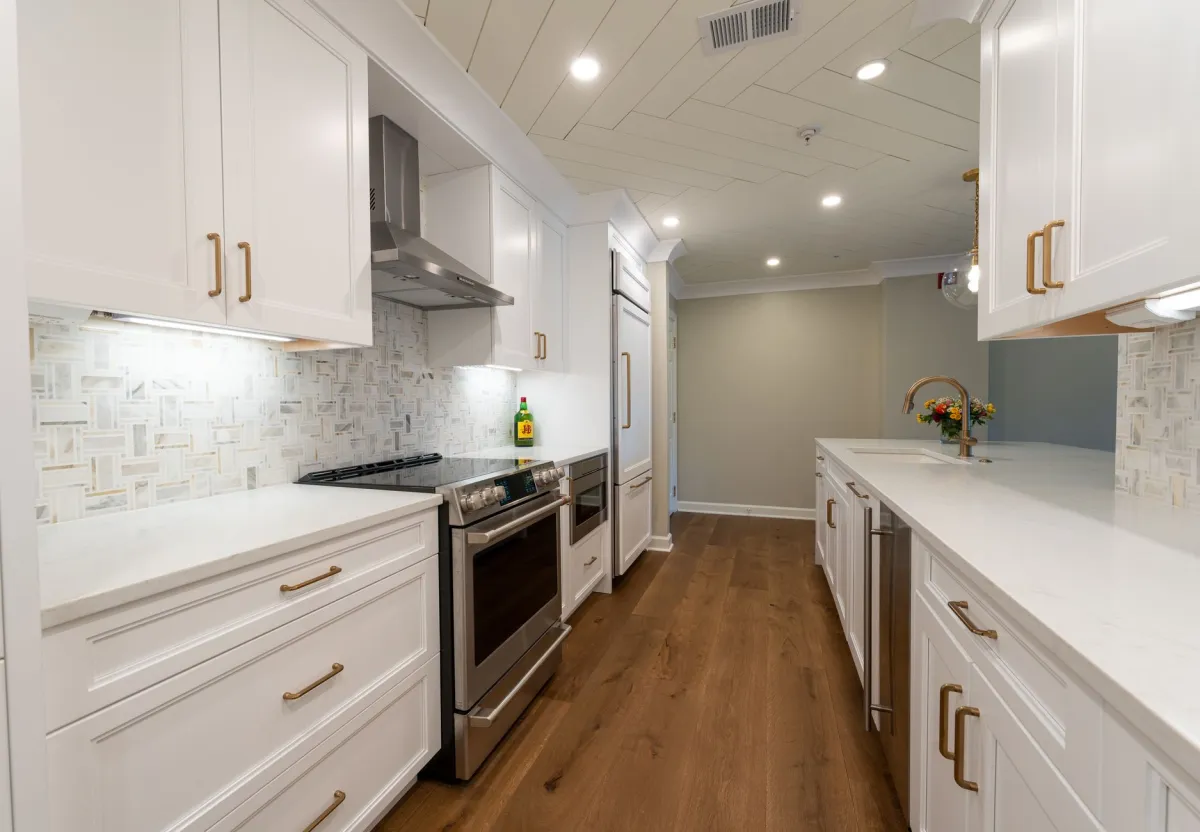
Kitchens. Tile handles spills, dropped pans, and traffic better than most alternatives. Large-format porcelain with tight grout joints keeps cleaning simple. Backsplashes are where people spend on something interesting, since the square footage is small. See our kitchen remodeling page for how tile sequences with cabinets and counters.
Entries and mudrooms. This is where Pennsylvania winters earn their reputation. Snow, road salt, and grit arrive daily from December through March. Porcelain with a textured finish and a darker or variegated grout handles it far better than wood or sheet goods.
Basements. Tile over a properly prepared slab is one of the best below-grade choices because it does not mind occasional moisture the way wood does. The slab has to be dry and sound first. If there is any history of water, that gets solved before flooring, which our basement finishing work addresses in sequence.
Covered porches and steps. Possible, but only with exterior-rated porcelain, exterior-grade setting materials, and freeze-thaw detailing. Interior tile placed outside delaminates within a couple of winters, and often a concrete or masonry surface is the better answer outdoors.
Bucks County Realities
The housing stock here runs from eighteenth-century stone farmhouses to mid-century ranches to new construction, and each brings a different tile conversation.
Older homes in Doylestown, Newtown, and Yardley. Expect out-of-level floors, out-of-plumb walls, and framing that predates modern span tables. Layout gets set from the most visible sightline rather than assuming anything is square, with cuts at the walls absorbing the discrepancy. That is craft work, and it is where experience with local housing stock shows.
Multiple flooring layers. Decades of renovations stack up. It is common to find vinyl over linoleum over plank subfloor. Demolition scope is hard to pin down precisely until the first section comes up, which is why a sensible contractor explains that range up front instead of discovering it on day two.
Freeze-thaw cycling. Our winters swing above and below freezing repeatedly, which matters for anything tiled in an unheated or exterior space. Exterior-rated material and proper drainage are not optional.
Radiant and basement slabs. Both move. Both need an isolation layer. This single decision prevents the most common complaint we hear about tile installed elsewhere.
Permits. Replacing a floor covering generally does not require a permit on its own. A bathroom remodel that moves plumbing or alters electrical typically does, and that is handled by your municipal code office in Doylestown Township, Newtown, Warminster, Bensalem, or wherever your property sits. Our Bucks County service area page lists the communities we work in regularly.
Grout, Layout, and Hiring Well
Grout choice. Cement grout is standard, economical, and needs sealing. Epoxy costs more and is harder to install, but it resists staining and needs no sealing, which pays off on kitchen and shower floors. Color matters more than people expect: grout close to the tile color reads as a continuous surface, while contrasting grout makes a pattern of every joint. That is a design decision, not an afterthought.
Layout. A good installer dry-lays and plans before mixing mortar, so cuts land where they are least visible and you never get a sliver of tile at the doorway. Ask to see the layout plan before setting begins.
Questions worth asking any tile contractor:
- What substrate and waterproofing system are you using, by product name?
- Will you flood test the shower pan before tiling?
- How are you addressing floor flatness and deflection?
- Where are the movement joints going?
- Who is doing the work, your crew or a subcontractor?
- What is the warranty on labor, and what does it exclude?
Vague answers on waterproofing are the clearest warning sign in this trade. For a broader framework on evaluating bids and contracts, read our contractor selection guide, and see our tile installation page for the scope we handle.
Planning a Tile Project in Bucks County?
Altieri & Sons installs tile floors, showers, and backsplashes across Bucks County and the surrounding area. We will look at your subfloor, talk through material that fits how you actually live, and give you a straight number.
Frequently Asked Questions
How much does tile installation cost in Bucks County PA?
Installed tile work in the area generally plans out around $12 to $30 per square foot for a straightforward floor, and roughly $25 to $60 per square foot for a tiled shower, where waterproofing and detail work drive most of the labor. Material is only part of the number. Subfloor repair, demolition and disposal, uncoupling or waterproofing membranes, trim pieces, and layout complexity all move the total, so a real price should come from a site visit rather than a chart.
Is porcelain or ceramic tile better for a floor?
For floors, porcelain is usually the better choice. It is fired denser, absorbs very little water, and resists chipping and wear better than standard ceramic, which matters in entryways, mudrooms, kitchens, and basements. Ceramic is easier to cut and often less expensive, which makes it a reasonable option for walls and low-traffic areas. If a floor sees boots, pets, and winter salt, porcelain earns the small price difference.
Can new tile be installed over existing tile or vinyl?
Sometimes, but it has to be verified first. The existing surface must be well bonded, flat, structurally sound, and able to accept the added height at doorways, thresholds, and appliances. Cushioned vinyl, loose tile, and hollow-sounding areas are not acceptable substrates. Tiling over a questionable floor is the fastest way to get cracked grout lines within a year, so a full tear-out is often the cheaper decision over the life of the floor.
What goes under tile in a bathroom or shower?
A tiled floor needs a stiff substrate, usually a cement backer board or an uncoupling membrane over properly fastened plywood subfloor. A shower needs a true waterproofing layer, either a sheet or liquid-applied membrane over the backer board, with a correctly sloped pan and a bonding flange or clamping drain. Drywall and green board are not shower substrates. Waterproofing is the part of the job no one sees and the part that decides whether the shower lasts.
Will tile crack over a basement slab or radiant heat?
Not if it is detailed correctly. Concrete slabs move and develop hairline cracks, and radiant floors expand and contract with each heating cycle. An uncoupling membrane lets the tile layer move independently of the substrate, and movement joints at perimeters and at large field spans absorb the rest. Tile set directly to a cracked slab with no isolation will usually telegraph that crack straight through.
How long does a tile installation take?
A typical bathroom floor runs about two to four working days including prep, setting, and grout. A full tiled shower commonly takes four to seven working days because waterproofing, mortar, and grout each need cure time before the next step. Larger kitchen or open-floor installations usually run one to two weeks. Cure times are not padding, and rushing them is a common cause of early grout and tile failure.