The Short Answer
Soffit and fascia are the least glamorous parts of a house and among the most consequential. They are the trim at the roof edge, and when they fail the failure does not stay there. Water finds the rafter tails, the sheathing, the wall cavity, and eventually the ceiling below.
If the fascia behind your gutters is soft to a screwdriver, if the gutters are pulling away, or if the panels under your overhang sag or are stained, the window for a repair has usually closed. And the upgrade that makes this project worth more than its cost is one most homeowners never hear about: replacing soffit is the only practical moment to fix attic intake ventilation, which extends the life of the roof above at almost no extra material cost.
What Soffit and Fascia Actually Do
Fascia
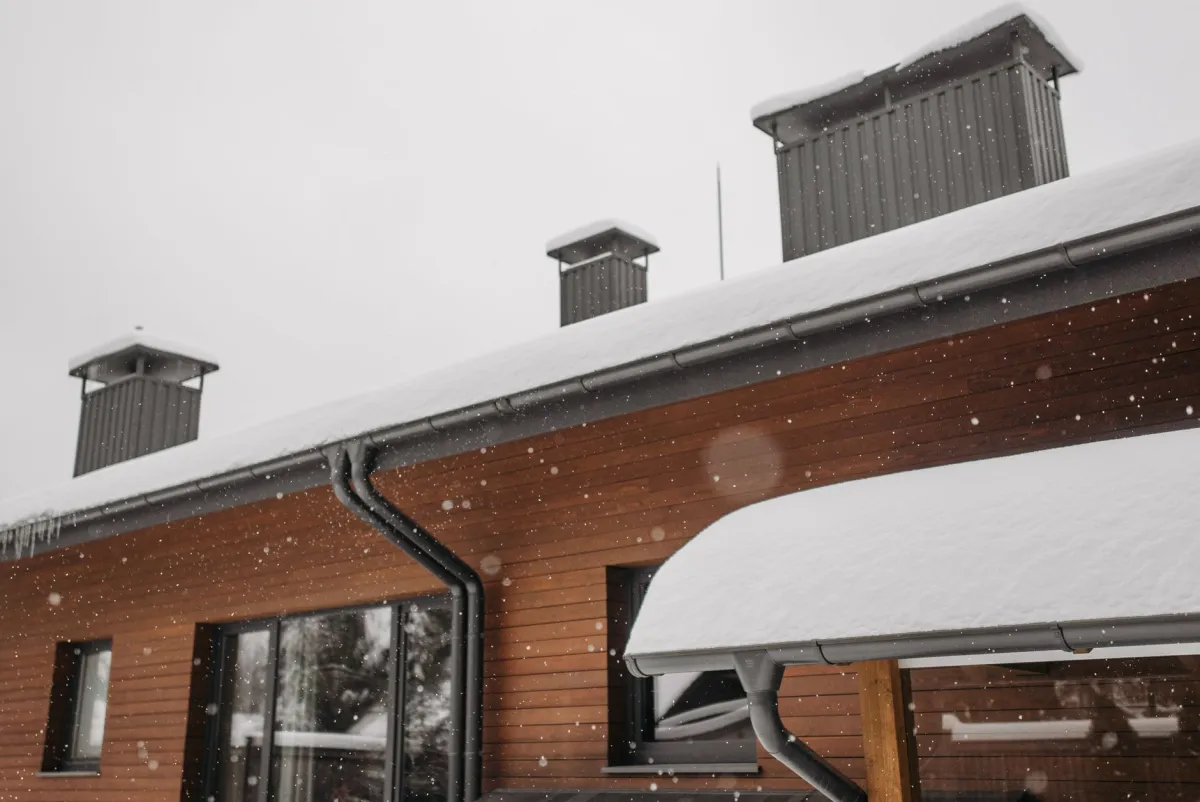
Fascia is the vertical board running along the roof edge, capping the rafter ends. It gives the roof a finished line, provides the nailing surface that gutter hangers grip, and with the drip edge closes the gap between roof covering and open air so water sheds forward into the gutter instead of running backward along the deck.
That last job is why fascia rot escalates. A gutter full of water sits against the fascia for the life of the house, and once the paint film or metal wrap lets moisture through, the board behind stays wet.
Soffit
Soffit is the horizontal panel enclosing the underside of the overhang, spanning from the fascia back to the wall. It keeps wind-driven rain, birds, squirrels, and wasps out of the space where the rafters meet the top of the wall, and on a correctly built house it carries the vents that feed air into the attic. Because it faces downward, it is the hardest surface on a house to inspect casually, and most homeowners notice a problem only after a panel has dropped out of its channel.
Not Sure If It Is Repair or Replace?
Altieri & Sons works on roof edges, gutters, and exterior trim throughout Atlantic County and South Jersey. We probe the wood before we quote the trim.
Signs Yours Need Replacing
Most of these you can check from the ground with binoculars. The decisive one needs a ladder and a screwdriver, and if heights are not your thing, have a contractor do it during an estimate.
- Soft wood. Press a screwdriver into the fascia behind the gutter, especially at corners and downspout outlets. If it sinks rather than stops, that board is done.
- Paint that will not hold. Blistering or peeling that returns a season after a good repaint means moisture is coming from behind the paint, not failing on its surface.
- Dark streaking under the gutter. Tiger striping on the gutter face and staining on the fascia below both point to water overflowing or wicking back at the edge.
- Gutters pulling away. Hangers that loosen repeatedly usually mean the fascia behind them has lost its hold, not that the gutter is faulty.
- Sagging or open soffit panels. Panels that bow, separate from the wall, or show daylight at the seams have lost their nailing or absorbed water.
- Wildlife and insects. Birds nesting in the overhang, squirrels at the eave, or wasp nests inside the soffit all indicate an opening large enough to matter.
One distinction matters. Rot confined to one short run, caught early, is a genuine repair. Rot at several points along the same elevation is one systemic condition, and patching it piecemeal usually costs more over five years than replacing the run once.
Why Atlantic County Is Harder on a Roof Edge
The same house built in Hammonton and in Brigantine will not age the same way at the eaves, and the reasons matter before you choose materials.
Salt in the Air
Airborne salt does not simply sit on a surface. It holds moisture, so a salt-dusted fastener or gutter hanger stays damp long after the rain stops. Corrosion at the roof edge runs faster in the shore communities than inland, and the first casualties are nails, screws, hangers, and unprotected steel flashing.
Wind-Driven Rain
Storms off the bay and ocean drive rain sideways and upward. Standard roof detailing anticipates water falling down, not water pushed into the underside of an overhang, which is what happens on an exposed elevation during a nor'easter.
Freeze-Thaw and Debris
Water soaked into wood fascia expands when it freezes and opens the grain a little more each winter, which is why neglected trim degrades in steps rather than gradually. Where gutters ice at the edge, the mechanism behind an ice dam forces meltwater back against the fascia. Inland, around Egg Harbor and Galloway, pine needle litter clogs gutters and blocks vents.
Material Options Compared
There are four common choices, and the sensible answer is usually a combination rather than one material everywhere.
Wood
Traditional, takes paint beautifully, suits historic and detailed homes. It needs maintenance on a real schedule, and in coastal exposure unmaintained wood is the shortest-lived option here. Specify rot-resistant species or treated stock.
Aluminum
Coil stock bent to profile and fitted over sound wood. It is rigid, does not rot, holds gutter hangers through to the board behind it, and the finish outlasts paint. Its weakness is hiding what is underneath. Wrapping rotted wood instead of replacing it is a common shortcut in this trade, buying a few good-looking years while the damage continues out of sight.
Vinyl
The usual choice for soffit panels. It will not corrode, vented panels are inexpensive, and it cleans easily. It expands and contracts noticeably, so it must sit loose in its channel. Nailed tight, it buckles in July and oil-cans permanently.
Cellular PVC
The premium option for fascia. It cannot rot, holds paint well, needs no metal wrap, and machines like wood. It costs more up front and demands correct gapping for expansion, but on an exposed shore elevation it is often the best value over twenty years.
A pairing that works on most homes here: PVC or new wood fascia capped in aluminum, with vented vinyl soffit above it. If you are replacing siding at the same time, do the trim first, because the siding terminates into the trim. Our siding replacement guide for Burlington County covers that sequencing.
What Drives the Cost
Soffit and fascia are priced by the linear foot, and the spread between a simple job and a complicated one on the same size house is wide. Rather than quote a figure that will be stale by the time you read it, here is what moves it.
- Linear footage and corners. A rectangular ranch has far less roof edge per square foot than a home with dormers, bays, gables, and returns. Corners and transitions are slow work.
- Height and access. Ladder work on a single story is one labor rate. Three stories, a steep grade, a deck below the eave, or anything needing staging is another.
- Hidden rot found on opening. The honest variable. Until the trim comes off, nobody knows whether the rafter tails and sheathing edge are sound. A good contractor says so in advance and gives you a unit price for the repair.
- Gutter removal and reinstallation. Gutters have to come off to replace fascia, and older ones often do not survive removal intact. Our gutter installation guide covers sizing and materials.
- Material selection. Vented vinyl soffit with aluminum-wrapped fascia sits at the economical end; cellular PVC with custom profiles sits well above it.
- Ventilation and disposal. Adding intake vents, cutting blocking, and installing baffles is labor that pays for itself in roof life. Old trim, old gutters, and wet debris all have to leave the property.
When a bid lands notably below the others, the usual explanation is that it wraps rather than replaces, excludes rafter tail repair, or skips ventilation. Ask which of the three.
Ventilation: The Part That Gets Skipped
Attic ventilation is a loop. Cool air enters low at the soffit, moves up under the roof deck carrying heat and moisture, and exits high at the ridge. Both halves have to work. Exhaust without intake does nothing useful, and may pull conditioned air out of the house instead of air from outside.
One sequence creates the problem again and again. A home gets a new roof, the roofer installs a ridge vent because ridge vents are standard practice now, and nobody touches the soffit. The result is a roof with an exit and no entrance: the attic runs hotter in summer, shingles age faster from underneath, and in winter moisture condenses on the sheathing.
When soffit is already coming off, fixing this is inexpensive. It takes three things: vented panels with real net free area rather than decorative perforations, openings cut through any solid blocking behind the panel, and baffles so eave insulation cannot slide down and seal the intake from inside. The third is the one most often missed, and it quietly cancels out the first two.
If your roof is also nearing replacement, that is a strong argument for doing both at once. Our guide to the best time to replace a roof covers sequencing.
What a Proper Replacement Looks Like
A correct job follows a predictable order, which makes a contractor's description easy to evaluate.
- Inspection with probing. Not a glance from the driveway. A screwdriver into the fascia at multiple points, a look into the attic at the eaves, a check of how the gutters drain.
- Gutters down, trim off, roof edge opened. The first shingle course and drip edge are lifted so the top of the fascia is accessible, and rafter tails and the sheathing edge get repaired or sistered where they are soft. This step separates a lasting job from a cosmetic one.
- New fascia set true, soffit and venting installed. Fascia fastened into solid framing and aligned so the gutter holds proper pitch; panels fitted into channel with room to move, vents where air can reach them, baffles in the attic.
- Edge detail and gutters reset. Drip edge and flashing go back in the correct order so water sheds forward into the gutter, with correct pitch to downspouts that discharge away from the house. A perfect roof edge draining against the foundation just moves the problem to the basement.
Questions That Separate the Bids
Four questions tell you most of what you need to know about an estimate for this work.
Replacing the fascia or wrapping it? Both are legitimate. Wrapping sound wood in aluminum is good practice; wrapping rotted wood is concealment. Ask which the bid assumes, and what happens if the wood turns out bad.
What is your price for rafter tail repair if we find it? A contractor with a unit price ready has done this before and is not avoiding the day-two conversation.
Does the bid include intake ventilation and attic baffles? If the answer is vague, the answer is no.
Are the gutters reused or replaced? Get it in writing, so there is no surprise when a thirty-year-old gutter does not survive removal. Our guide to choosing a remodeling contractor covers licensing, insurance, and reading a scope line by line.
Protect the Roof Edge Before Winter
Altieri & Sons Construction has handled residential roofing, gutters, siding, and exterior trim across South Jersey and southeastern Pennsylvania since 1976. We will tell you plainly whether you are looking at a repair, a run of replacement, or a project worth combining with the roof.
Frequently Asked Questions
What is the difference between soffit and fascia?
Fascia is the vertical board that runs along the edge of the roof, closing off the ends of the rafters and carrying the gutters. Soffit is the horizontal underside panel that spans from the fascia back to the wall, enclosing the overhang. Fascia is what you see from the street when you look at the roof edge. Soffit is what you see when you stand under the overhang and look up. They are installed as a system, they fail as a system, and on most homes they are replaced together because the fastening and flashing details overlap.
How do I know if my soffit and fascia need replacing in Atlantic County NJ?
The reliable tests are physical rather than visual. Press a screwdriver into the fascia behind the gutter where water sits longest. If it sinks into the wood instead of stopping, the board is rotted. Look for peeling or blistering paint that keeps returning after repainting, dark staining or streaks under the gutter line, soffit panels that sag or have separated from the wall, daylight visible through gaps, and any sign of birds, squirrels, or wasps nesting in the overhang. Sagging gutters that pull away from the house are often a fascia problem rather than a gutter problem, because the hangers have nothing solid left to grip.
Does coastal air in Atlantic County shorten soffit and fascia life?
Yes, in two distinct ways. Airborne salt is hygroscopic, meaning it holds moisture against a surface rather than letting it dry, and it accelerates corrosion of fasteners, gutter hangers, and unprotected metal flashing at the roof edge. Separately, wind-driven rain off the bay and ocean pushes water horizontally into the underside of the overhang, which is the one direction standard roof detailing does not expect water to come from. Homes in the shore communities of Atlantic County commonly need attention at the roof edge sooner than inland homes of the same age and construction.
Can soffit and fascia be replaced without replacing the roof?
Usually yes. Fascia and soffit work happens at the roof edge, and a careful crew can lift the first course of shingles and the drip edge, replace the boards, and reset the edge detail without disturbing the field of the roof. There are two common exceptions. If the rot has travelled back into the rafter tails or the roof sheathing at the eave, that is structural repair and the work extends under the roofing. And if the roof is already near the end of its life, doing both at once is almost always cheaper than paying twice to open the same edge.
Should soffit vents be added during replacement?
In most cases yes, and it is the single most valuable upgrade available during this job. Attic ventilation works as a loop: air enters low at the soffit and exits high at the ridge. Many older homes have ridge venting that was added during a reroof but no functioning intake at the soffit, so the loop never completes. Replacing soffit is the only convenient moment to add continuous vented panels, and the vents must also be free of insulation blocking them from inside the attic, which is why baffles are part of a correct installation.
Is aluminum or vinyl better for soffit and fascia at the Jersey Shore?
Aluminum fascia wrap over sound wood is the common choice because it is rigid, holds gutter hangers through to the board behind it, and resists the sun and salt better than paint. Vinyl soffit is popular for the underside because it does not corrode at all and vented panels are inexpensive, though it expands and contracts noticeably and must be installed loose in the channel rather than nailed tight. Cellular PVC trim is the premium option for fascia where appearance matters, since it will not rot, holds paint well, and needs no wrap. The right answer depends on the house, the exposure, and the budget, not on a single best material.