Why South Jersey Basements Take On Water
A wet basement is rarely a mystery once you accept that water follows the easiest available path. Concrete and block are not waterproof. They are porous, they crack as they cure and settle, and every joint, tie rod, and pipe penetration is a potential entry point. Water does not need a dramatic defect — it needs pressure and time.
Gloucester County sits on the Atlantic Coastal Plain, and the soil here behaves differently than the rocky ground north and west in Pennsylvania. Sandy loam drains fast in some areas and sits over dense clay lenses in others, so water moving down through topsoil can hit an impermeable layer and travel sideways until it meets something solid — often a foundation wall. Neighborhoods near Mantua Creek, Raccoon Creek, and the Big Timber Creek watershed can also carry a seasonally high water table, so a house that is bone dry in August takes on water every March.
Housing stock matters just as much. The mid-century ranches and split-levels common in Deptford and Washington Township typically sit on block foundations with mortar joints that have had sixty years to weather. Older homes near the Woodbury and Pitman cores may have stone or brick foundations with eroded mortar. Newer construction in Monroe Township and Harrison Township is usually poured concrete, which fails differently: fewer seams, but hairline cracks running down from a window or corner.
None of these conditions is unusual, and none means your house has a structural problem. They mean the drainage plan around your house is no longer doing its job.
Reading the Signs Before You Spend
The single most expensive mistake homeowners make is buying a solution before diagnosing the cause. Where the water shows up, and when, tells you most of what you need to know.
Water at the Wall-and-Floor Joint
If water appears along the seam where the wall meets the slab, particularly in more than one location, that generally indicates hydrostatic pressure pushing water up and in beneath the wall. This is the pattern that interior perimeter drainage is designed to address.
A Vertical Stain or Trickle on One Wall
A single defined path down a poured wall usually means a crack. These are frequently repairable directly, and if the crack is stable and non-structural, that repair is far less invasive than a whole-perimeter system.
Water Near a Window, Door, or Hatchway
Window wells and basement entries are collection points. When the drain at the bottom of a well clogs, the well becomes a bucket held against your wall. This is almost always a maintenance and detailing problem, not a waterproofing problem.
Efflorescence and Musty Odor Without Visible Water
The chalky white residue on block or concrete is mineral left behind as water passes through and evaporates. Even with a dry floor, it means moisture is moving through the wall. A persistent musty smell is the same signal reaching you through your nose.
Timing Tells You the Source
Water during or immediately after a storm points to surface water and roof runoff. Water that arrives a day or two later, or that tracks the season rather than the forecast, points to groundwater. Water that appears with no rain at all points to plumbing, a failed sump, or condensation.
Start Outside: The Fixes That Cost the Least
A meaningful share of wet basements in Gloucester County get solved without ever touching the basement. The reason is arithmetic: an inch of rain on a 1,500 square foot roof produces roughly 900 gallons, and all of it lands within a few feet of your foundation unless something moves it away.
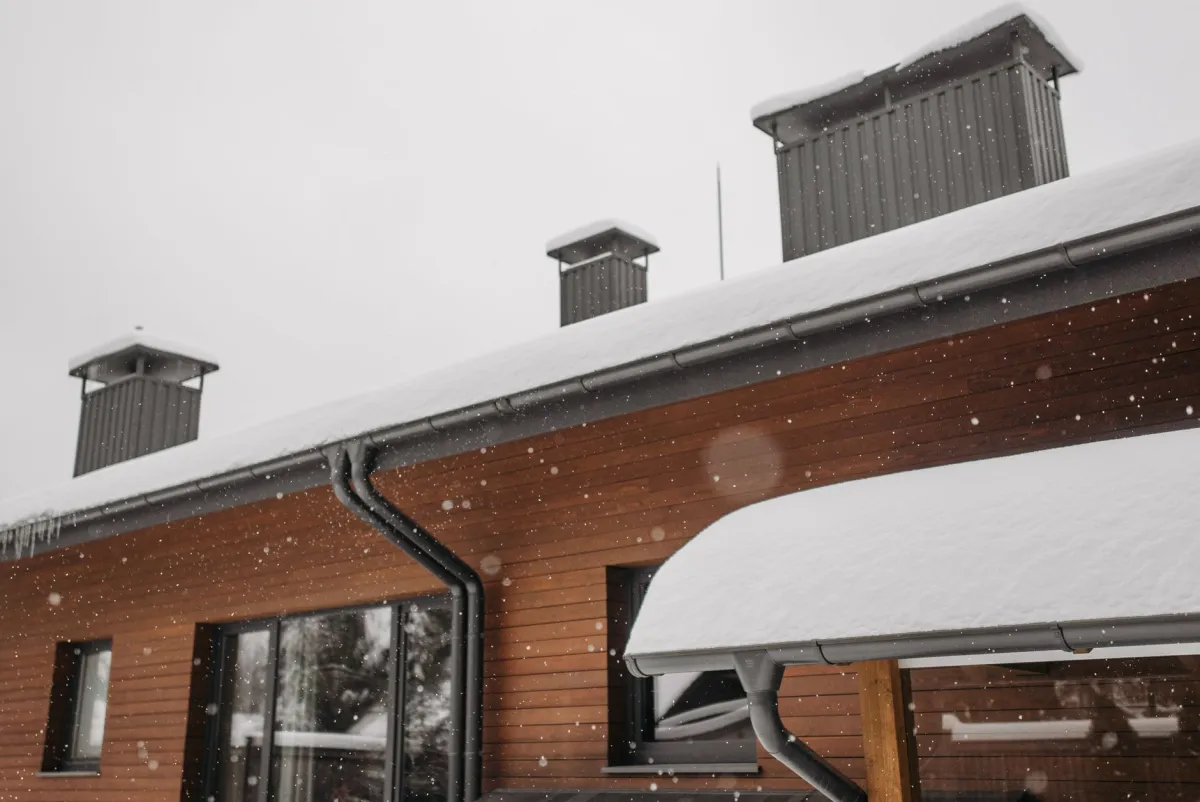
- Clear and correct the gutters. Clogged or undersized gutters overflow at exactly the wrong place. Sagging runs and reversed pitch do the same thing more quietly. Our guide to gutter installation and sizing covers what actually matters here.
- Extend the downspouts. Discharging four feet from the wall is not enough on flat lots. Ten feet or more, or a buried line to a proper discharge point, is the standard worth aiming for.
- Fix the grade. Soil should fall away from the house — roughly six inches over the first ten feet is the common benchmark. Settled backfill next to the foundation creates a trough that holds water against the wall.
- Look at hard surfaces. A driveway, walkway, or patio slab that has settled toward the house funnels water straight to the foundation. Concrete work that corrects pitch solves a drainage problem and a trip hazard at the same time.
- Service window wells. Clear the drains, add stone, and consider covers where wells sit below the surrounding grade.
These measures are cheap relative to any below-grade system, and worth completing first even when a larger repair is coming. Every gallon you keep away from the wall is a gallon a drainage system never has to handle.
Water in Your Basement This Season?
Altieri & Sons Construction handles basement work, drainage, and exterior corrections throughout Gloucester County and South Jersey. Family-owned, licensed and insured.
Interior Drainage and Sump Systems
When water enters under pressure at the base of the wall, the goal shifts from keeping water out to managing it. That is what an interior perimeter drain does, and it is the workhorse solution for houses with a high water table.
The work means cutting a channel in the slab along the interior perimeter, installing perforated pipe in stone below slab level, tying it to a sump basin, and patching the concrete. The pump then discharges outside, well away from the foundation. On block walls the system is often paired with weep holes so water trapped in the cores drains into the pipe instead of finding its way out higher up.
Why the Discharge Point Matters
A sump that pumps water six feet from the house has created a loop. The water saturates the soil, returns to the drain, and gets pumped again, and the pump wears out doing it. The discharge needs to reach a location where water genuinely leaves the site.
Backup Power Is Not Optional
In South Jersey, the storms that stress a sump pump are frequently the same storms that take down power. A battery backup or secondary pump is the difference between a working system and a system that fails precisely when it is needed. This is the most commonly skipped detail in basement drainage, and the most commonly regretted.
Exterior Excavation and Membrane Work
Excavating to the footing, cleaning and sealing the wall, applying a membrane or drainage board, and installing a footing drain in clean stone is the most thorough approach available. It stops water at the outside face of the wall rather than managing it after entry.
It is also the most disruptive and most expensive path, because it means removing landscaping, walkways, decks, and sometimes utilities, then restoring all of it. It is clearly the right call when a foundation wall needs structural repair anyway, when a finished basement cannot be opened up, or when a site condition interior drainage cannot reasonably address is driving the water.
For most homeowners the honest sequence is exterior surface corrections first, interior drainage second, and full excavation reserved for the cases that genuinely require it. A contractor who proposes the most invasive option before diagnosing the source has skipped a step.
What This Work Generally Costs
Costs depend on the cause, the foundation type, how much perimeter is involved, and access, so the tiers below are orientation rather than pricing. Two houses on the same street can differ substantially.
- Gutter, downspout, and grading corrections. The least expensive tier by a wide margin, typically hundreds to low thousands depending on scope. Also the tier with the best odds of solving the problem outright.
- Crack repair on a poured wall. Modest per-crack cost when the crack is stable and non-structural. Verification matters more than the repair itself.
- Sump pump installation or replacement. Usually low thousands, more with a sealed basin, backup power, and a properly routed discharge line.
- Interior perimeter drainage. Priced largely by linear footage of wall treated, so a partial-perimeter system costs meaningfully less than a full one. Access, slab thickness, and obstructions all move the number.
- Exterior excavation and membrane. The highest tier, driven by excavation, access limitations, and restoring everything that had to be removed.
The useful comparison is not system against system. It is the repair cost against what water damage does to a finished basement, stored belongings, mechanical equipment, and the air quality upstairs.
Waterproof Before You Finish
If you are reading this because you want to finish the basement, the order of operations is the whole ballgame. Framing, insulation, drywall, and flooring installed over an unresolved moisture problem hide it for a year or two, then present the bill with interest.
The sequence that works: find the source, correct it, then let the space prove itself through a wet stretch of weather before a single stud goes up. If you are budgeting, our breakdown of basement finishing costs belongs alongside this article, because waterproofing should be in that budget from the start rather than an emergency line item later.
One detail specific to below-grade space: even a dry basement in South Jersey runs humid in July and August. Plan for a dehumidifier with a permanent drain, choose flooring that tolerates moisture, and avoid building anything that traps humidity against the foundation wall.
Mistakes That Waste Money
- Painting the wall and calling it waterproofing. Interior sealers can slow vapor movement. Under real hydrostatic pressure they blister and peel, and you have bought time rather than a fix.
- Buying a full perimeter system for a single crack. Diagnosis first. A defined vertical trickle on one wall is a different problem than water across the whole footprint.
- Ignoring the roof and grade. Installing interior drainage while downspouts still dump beside the foundation means paying to pump water you could have redirected for far less.
- No backup for the sump. A pump without backup power is a system with a scheduled failure date.
- Finishing first, waterproofing second. This is the most expensive order possible, because the second step requires demolishing the first.
- Hiring without written scope. A proposal should state the diagnosed cause, the specific work, the discharge plan, and what is and is not included. Our guidance on choosing a remodeling contractor applies directly here.
Getting a Straight Assessment
A useful basement evaluation starts outside — roof drainage, grade, hard surfaces, window wells — because those conditions determine what any below-grade system will have to handle. Then it identifies where water enters and under what conditions, and explains why the recommended approach fits that pattern.
Altieri & Sons Construction works across Gloucester County — Deptford, Washington Township, Glassboro, Monroe Township, Mantua, Mullica Hill, Woodbury, Pitman, Swedesboro — as well as Camden County and Burlington County. If you want a second opinion on a basement proposal you already have, we are glad to give you one. Reach out here or call 215-416-8783.
Stop Guessing About the Water
Get an on-site assessment that identifies the source before anyone proposes a system. Serving Gloucester County and South Jersey.
Frequently Asked Questions
Why does my Gloucester County basement only get wet after heavy rain?
Rain-triggered water almost always means surface water is being delivered to the foundation rather than rising up from the water table. A roof collects an enormous volume during a storm, and if gutters overflow, downspouts discharge within a few feet of the wall, or the grade around the house slopes back toward the foundation, that water saturates the soil beside the wall and finds the easiest path in. Water that appears days after a storm, or that is present in wet seasons regardless of rainfall, points instead to a high water table or subsurface flow, which needs a different solution.
Do I need interior drainage or exterior waterproofing?
It depends on where the water originates. If the problem is surface water from roof runoff and grading, correcting those conditions outside is the first and cheapest step and frequently resolves the issue on its own. If water enters at the wall-to-floor joint under hydrostatic pressure, an interior perimeter drain tied to a sump pump is the practical fix because it relieves pressure and manages water instead of trying to hold it back. Exterior excavation and membrane work is the most thorough approach and the most expensive, and it makes the most sense when a foundation wall is also being repaired, when finished space cannot be disturbed, or when the wall itself is deteriorating.
How much does it cost to waterproof a basement in Gloucester County NJ?
Costs vary widely with the cause, the foundation type, and how much of the perimeter is involved, so treat any number you read online as a range rather than a quote. Correcting gutters, downspout extensions, and grading is usually the least expensive category, often in the hundreds to low thousands. A sump pump installation is commonly in the low thousands. An interior perimeter drain system typically runs in the thousands and scales with linear footage. Full exterior excavation with membrane and footing drains is the highest cost tier because of the excavation, access, and restoration involved. The only way to know your number is an on-site assessment of where the water is actually coming from.
Can I finish a basement that has had water in it?
Yes, but only after the water is controlled and the space has stayed dry through a wet season. Framing, insulation, drywall, and flooring installed over an active moisture problem will trap that moisture against organic material, and the damage shows up later as musty odor, staining, cupped flooring, and compromised drywall. The correct sequence is to identify the source, correct it, verify dryness over time, and only then build. Finishing first and waterproofing later means demolishing work you already paid for.
Do I need a permit to waterproof a basement in New Jersey?
In New Jersey, construction permits are issued by your municipal construction office under the state Uniform Construction Code, so requirements differ between Deptford, Washington Township, Monroe Township, Glassboro, and the other municipalities in Gloucester County. Simple exterior corrections like downspout extensions and regrading generally do not require a permit. Work that involves electrical circuits for a sump pump, plumbing connections, structural repair of a foundation wall, or any subsequent framing and finishing typically does. Your contractor should confirm with your specific municipality before work begins.
Will a dehumidifier fix a wet basement?
A dehumidifier manages humidity in a basement that is already dry. It does not stop liquid water from entering, and running one as a substitute for a real repair usually means the underlying problem keeps progressing out of sight. That said, once the water source is corrected, a dehumidifier is genuinely useful in South Jersey, where summer humidity keeps below-grade spaces damp even when nothing is leaking. Think of it as the last step rather than the solution.